
you, reflected
understanding the problem
mental health and app market research

1
Users drop mental health and wellness apps when they feel too task-like.
Source: Torous, J., Wisniewski, H., Liu, G., & Keshavan, M. (2018). "Mental health mobile phone app usage, concerns, and benefits."
problem statement
People who want to care for their emotional well-being often lack a space to reflect on their experiences through the lens of their personal values. Existing wellness apps emphasize improvement and correction, which can make users feel like something is wrong with them—preventing the development of self-awareness and genuine self-compassion.
hypothesis statement
If people know their core values and can use them as a framework for reflecting on their experiences, they can increase self-awareness, build lasting self-compassion, and improve emotional well-being.
understanding the people
user research through interviews and surveys
quantitative research
12-question survey, 42 participants
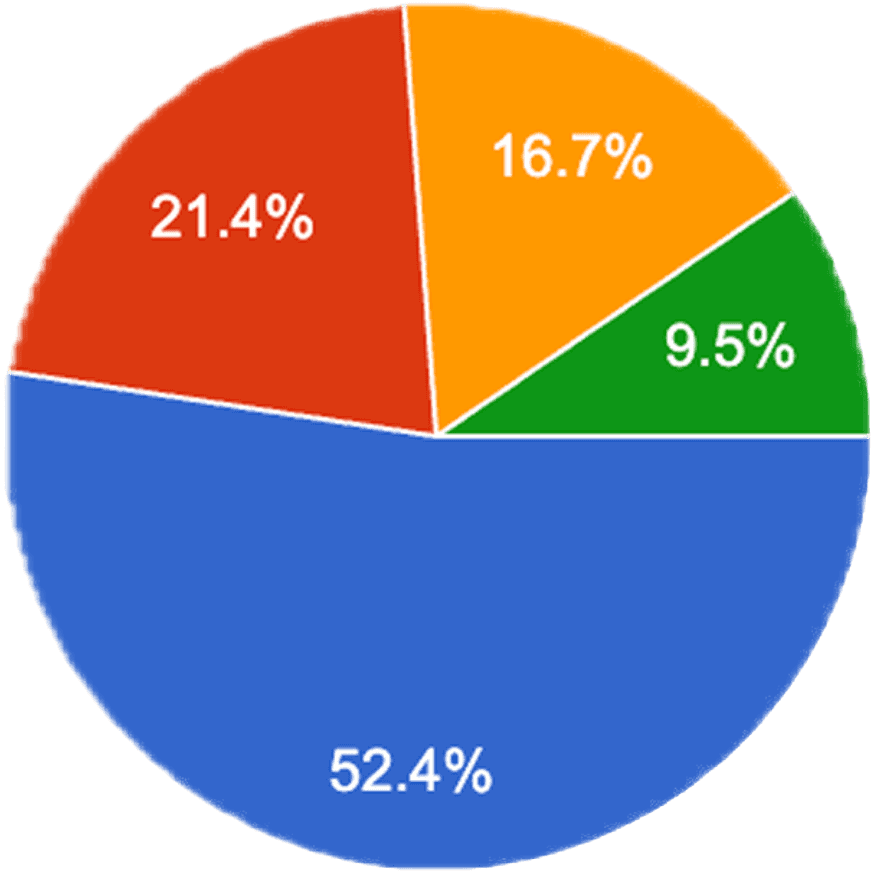
More than 50% consider their emotions daily
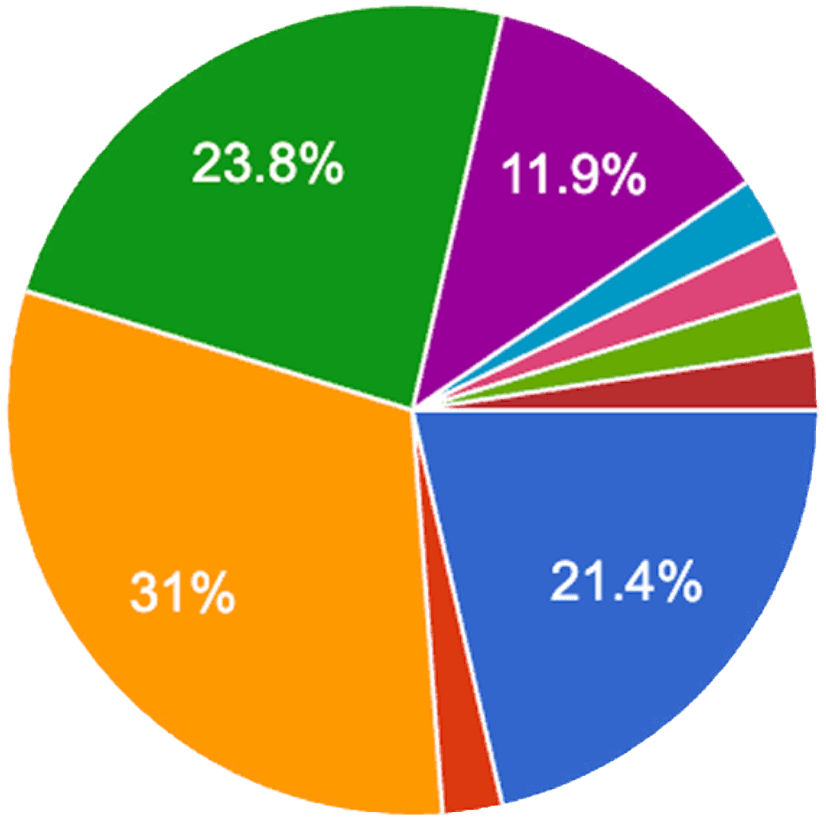
More than 50% have a harsh inner voice
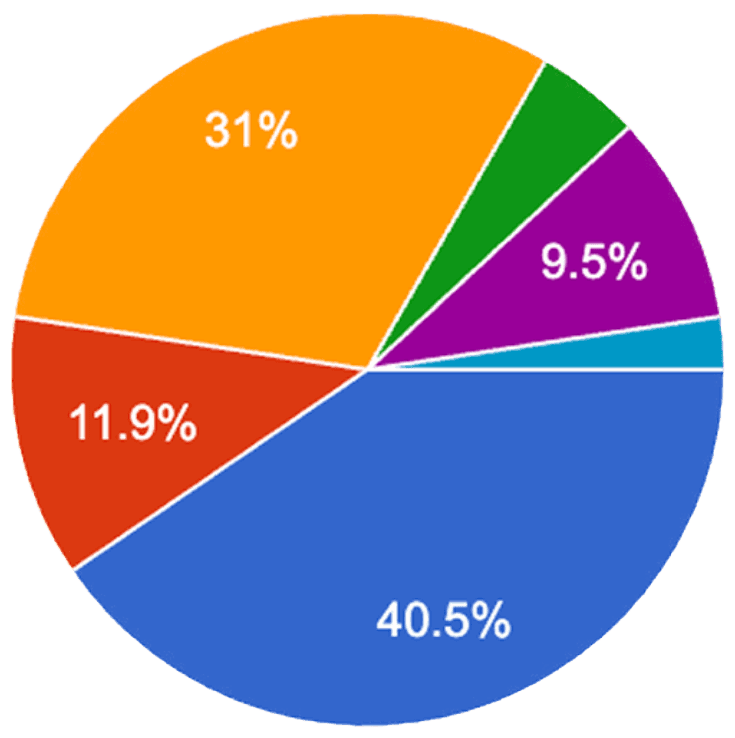
More than 40% tend toward self-criticism
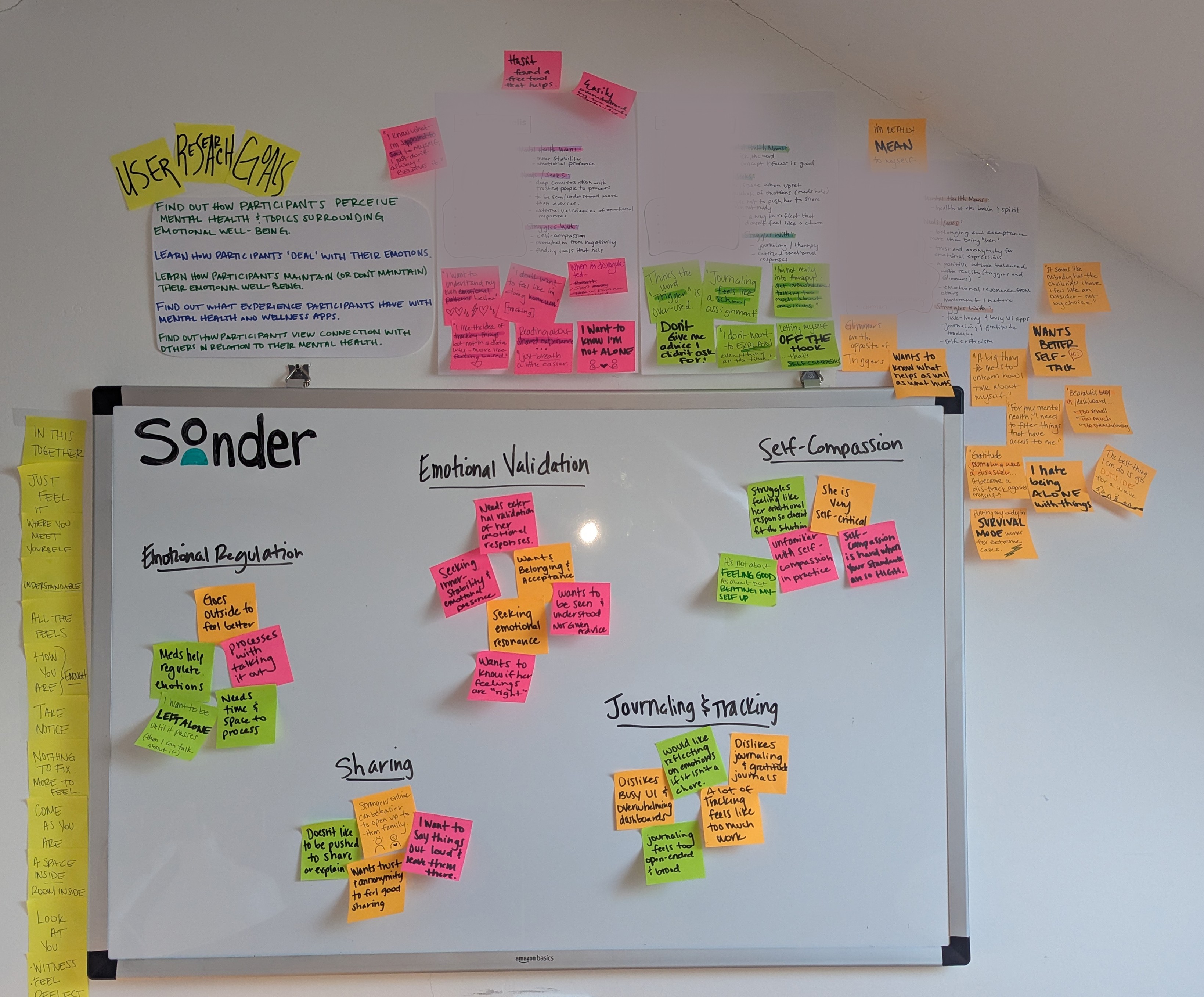
qualitative research
3 remote interviews (1-hour ea., recorded)
Cara, 36
“I find self-reflection helpful but if it gets too negative or heavy, I shut down.”
Juliet, 31
"I’ve done therapy but I still have a voice in my head that says I’m not enough."
Simone, 33
“I’ve tried journaling but when it feels like homework, I don’t stick with it.
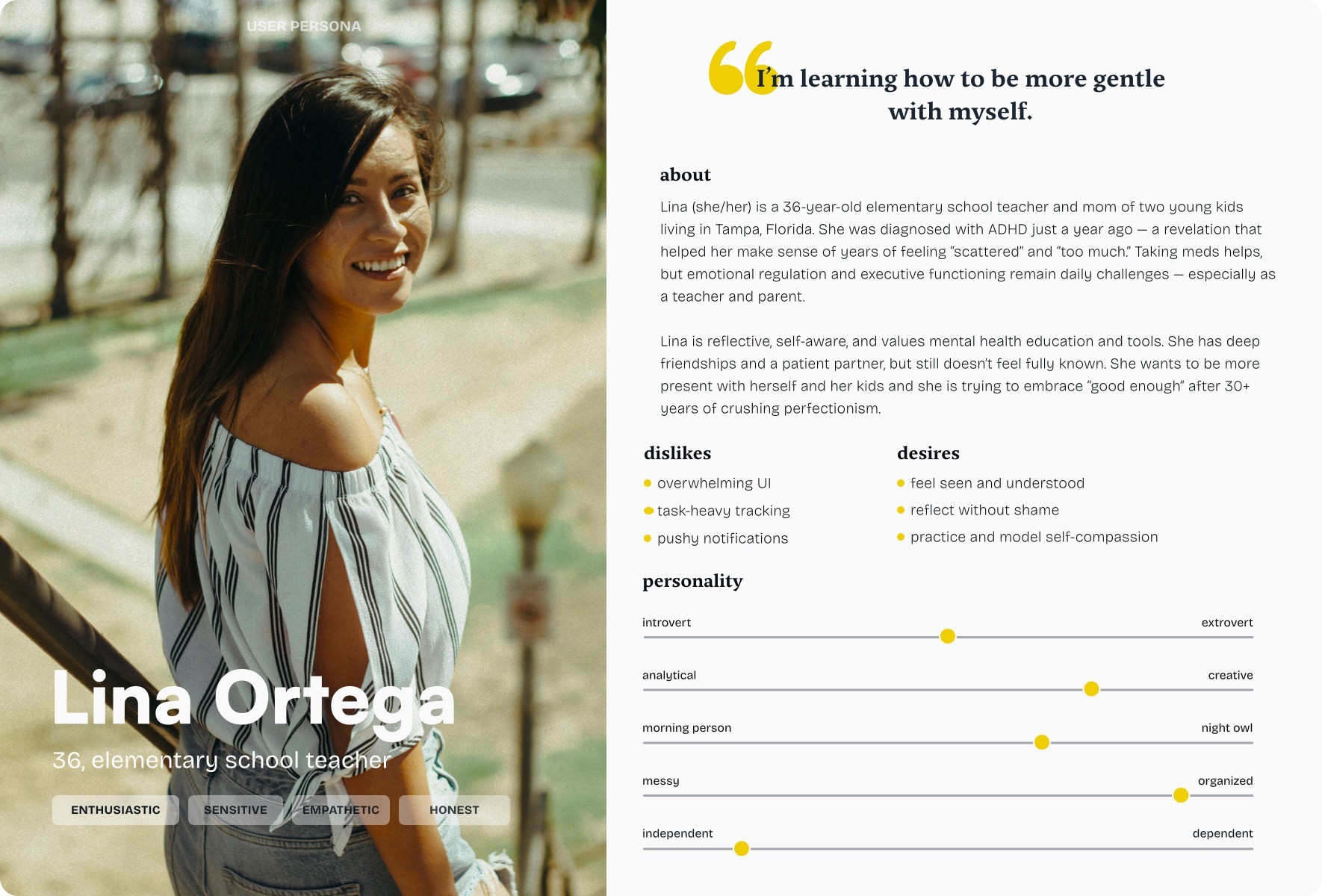
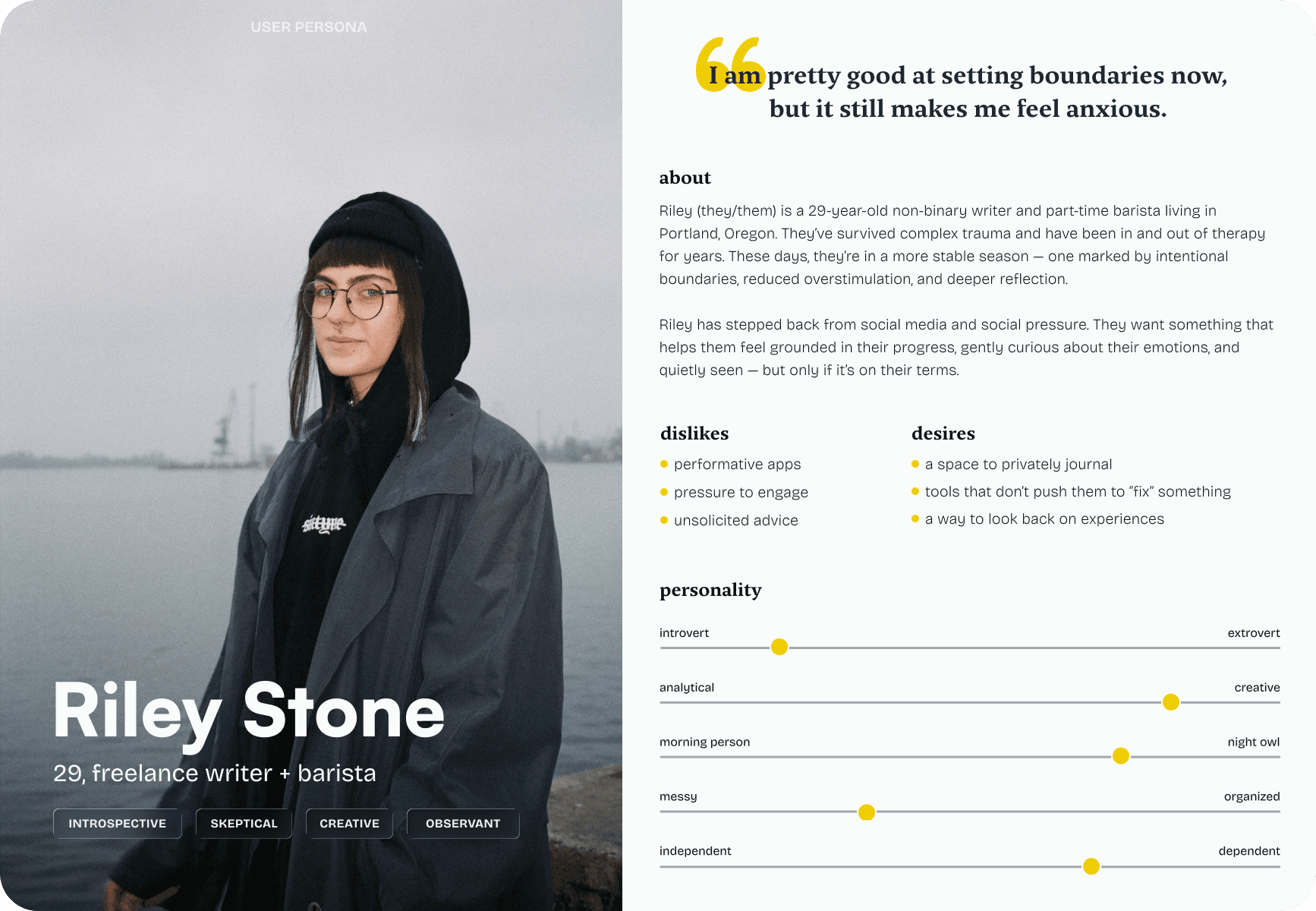
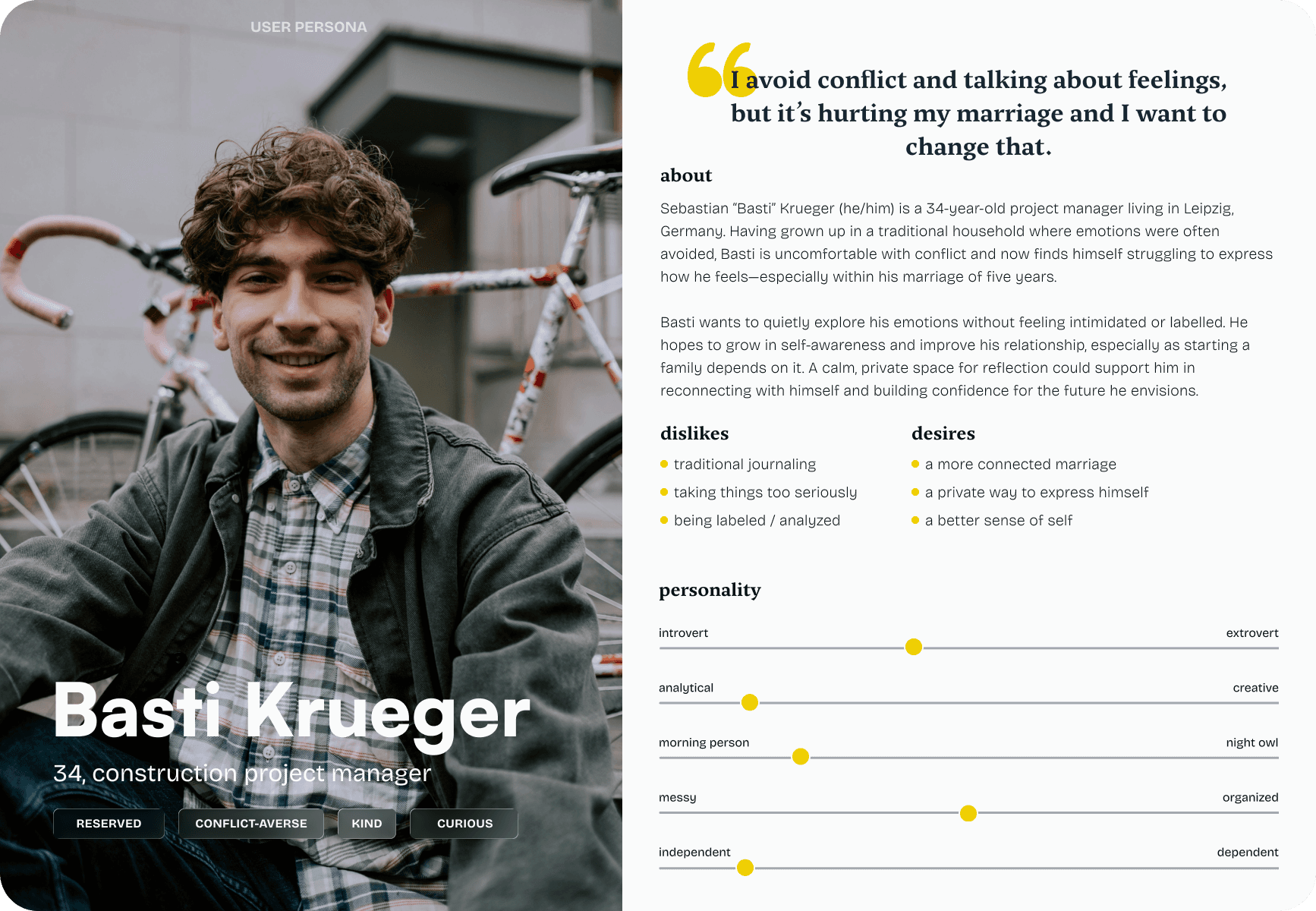
user personas
3 personas (2 primary, one outlier)
structuring the experience
task flows, journey mapping, site mapping, card sorting
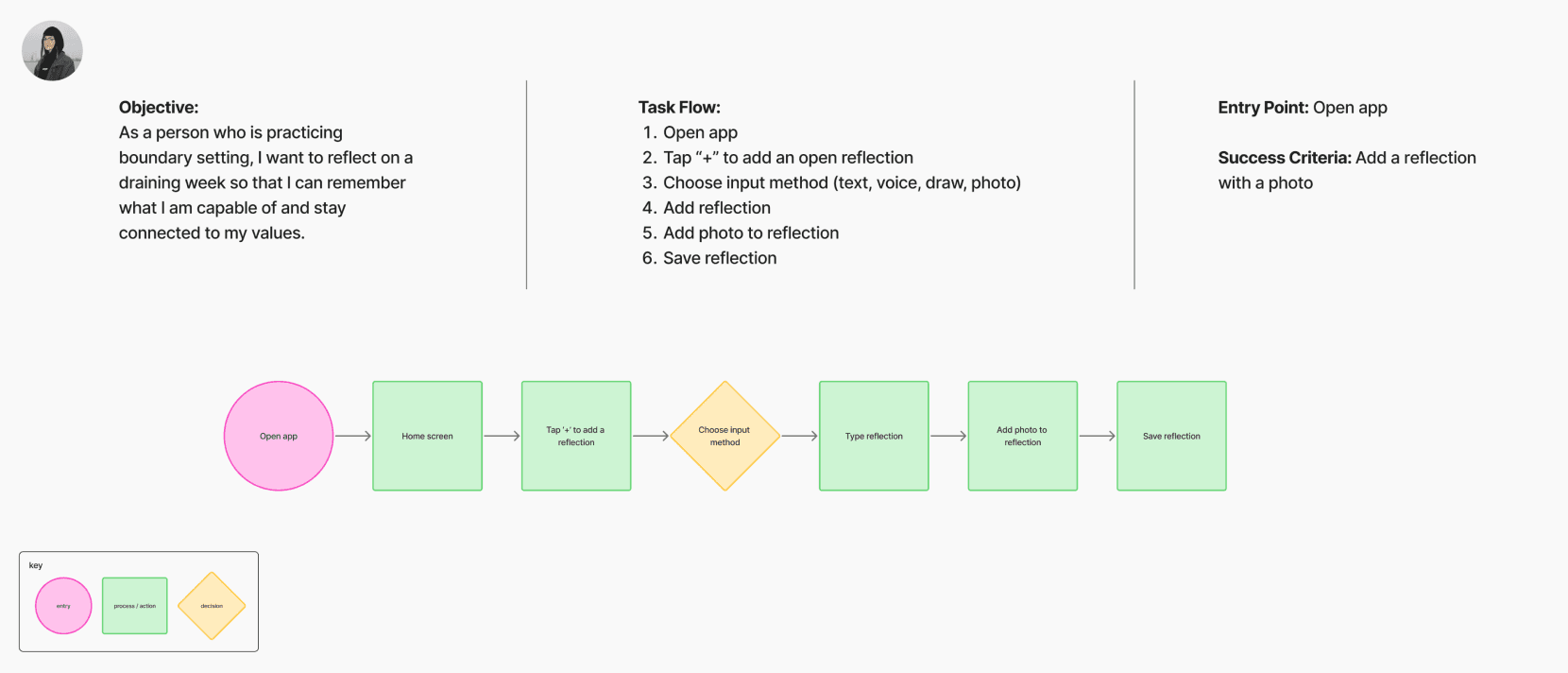
task- and user flows
3 user flows, 5+ task flows
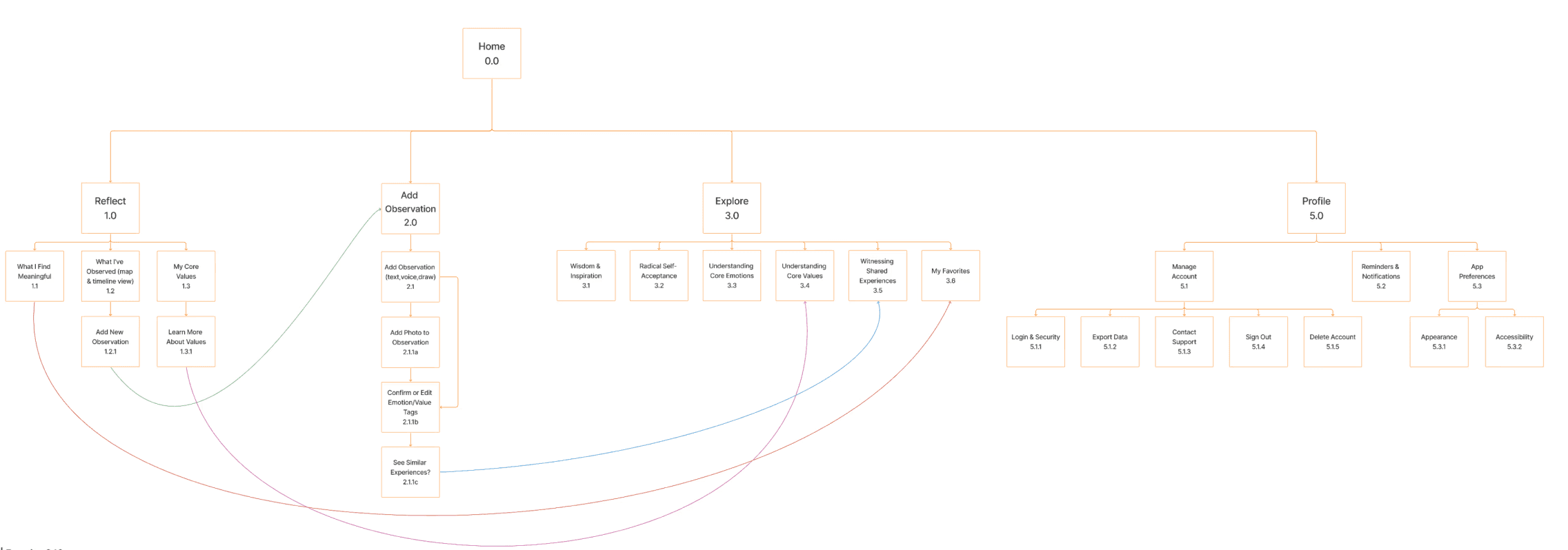
site map
early iteration
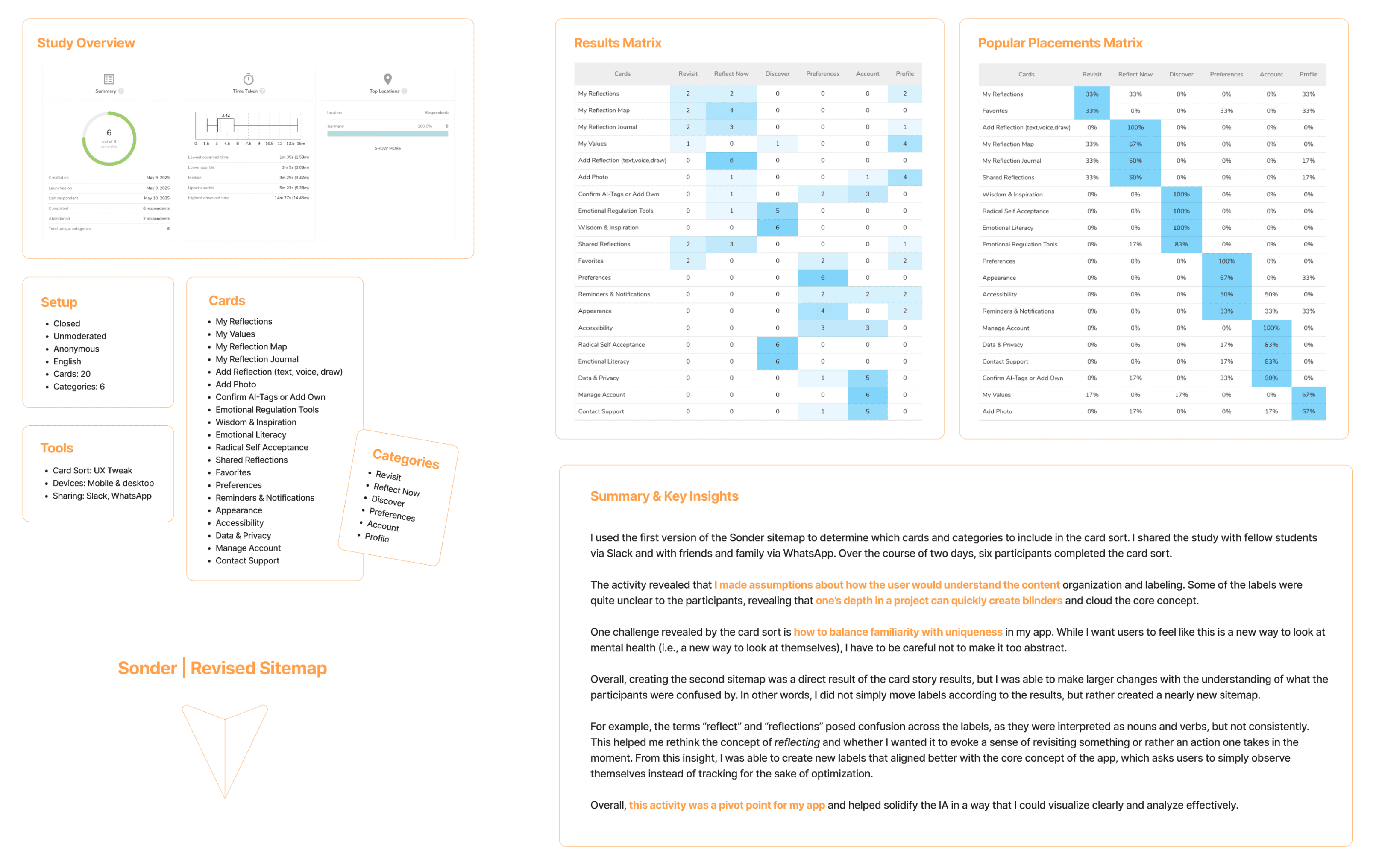
card sort study
6 completed
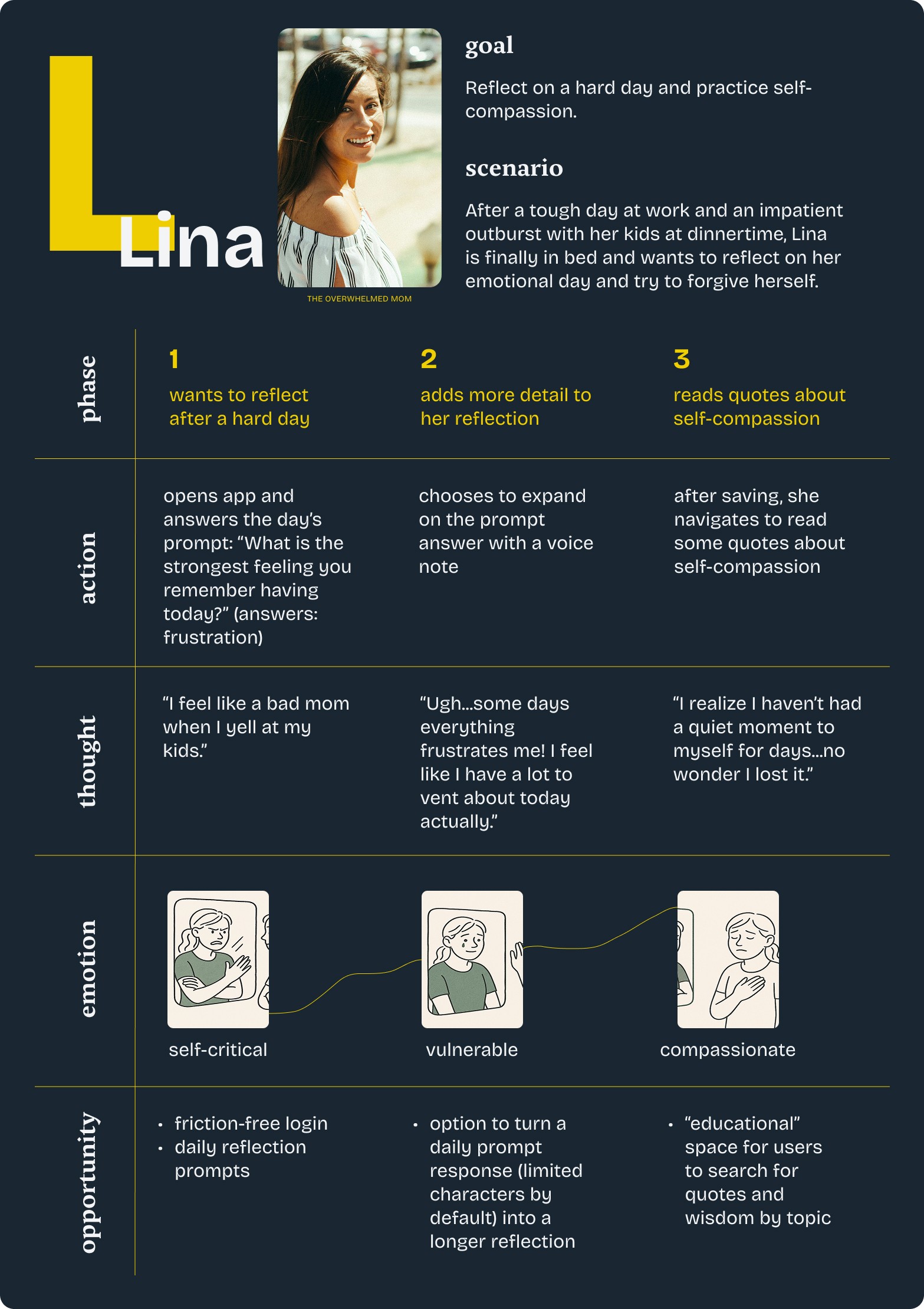
journey mapping
3 journey maps
designing the solution
sample of initial core feature design iterations
define values
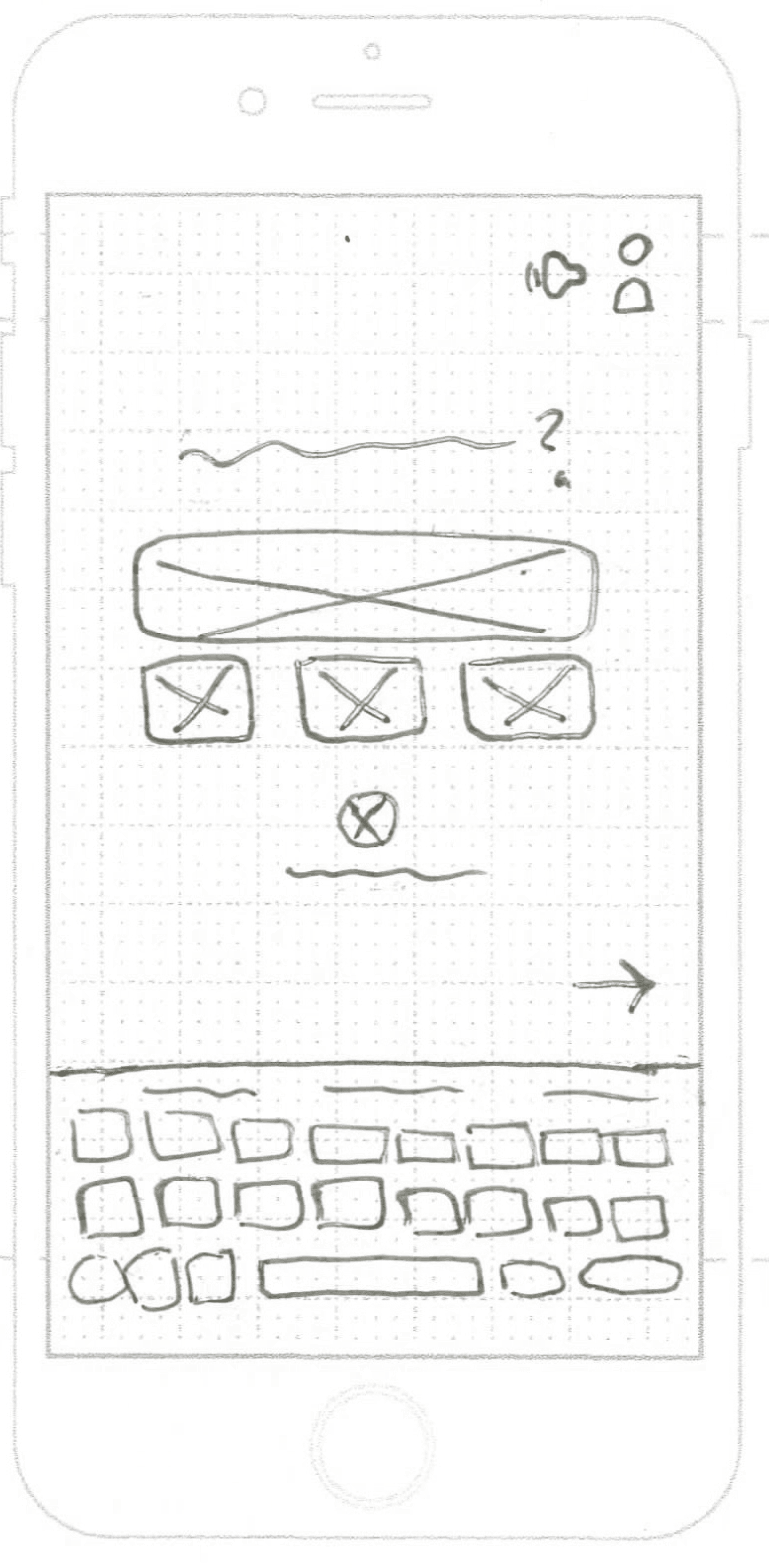
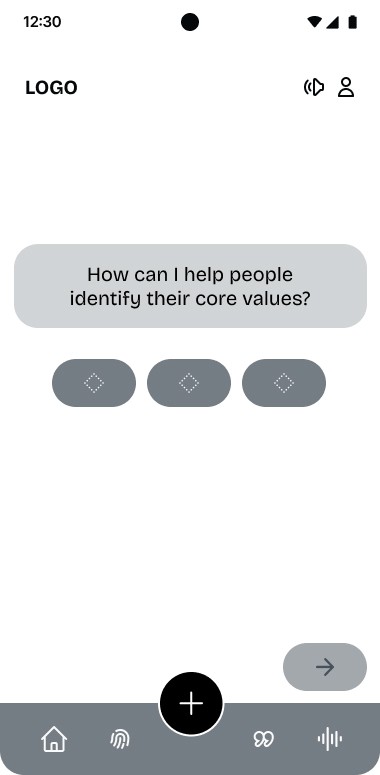
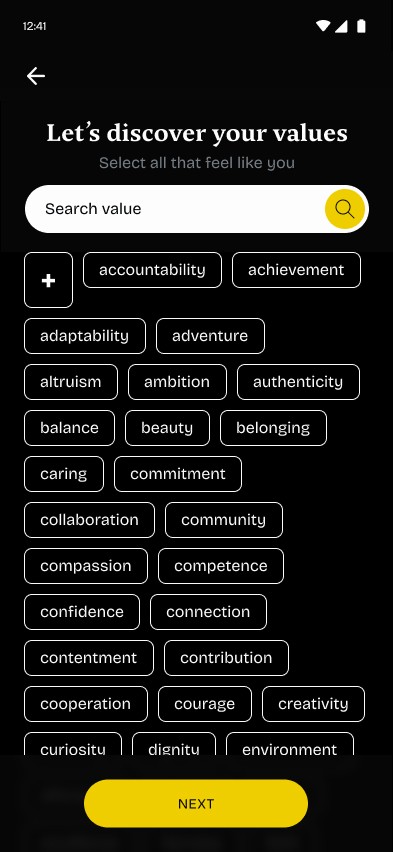
search values
animation: text input / predictive drop down
select values
animation: state change / vertical scroll
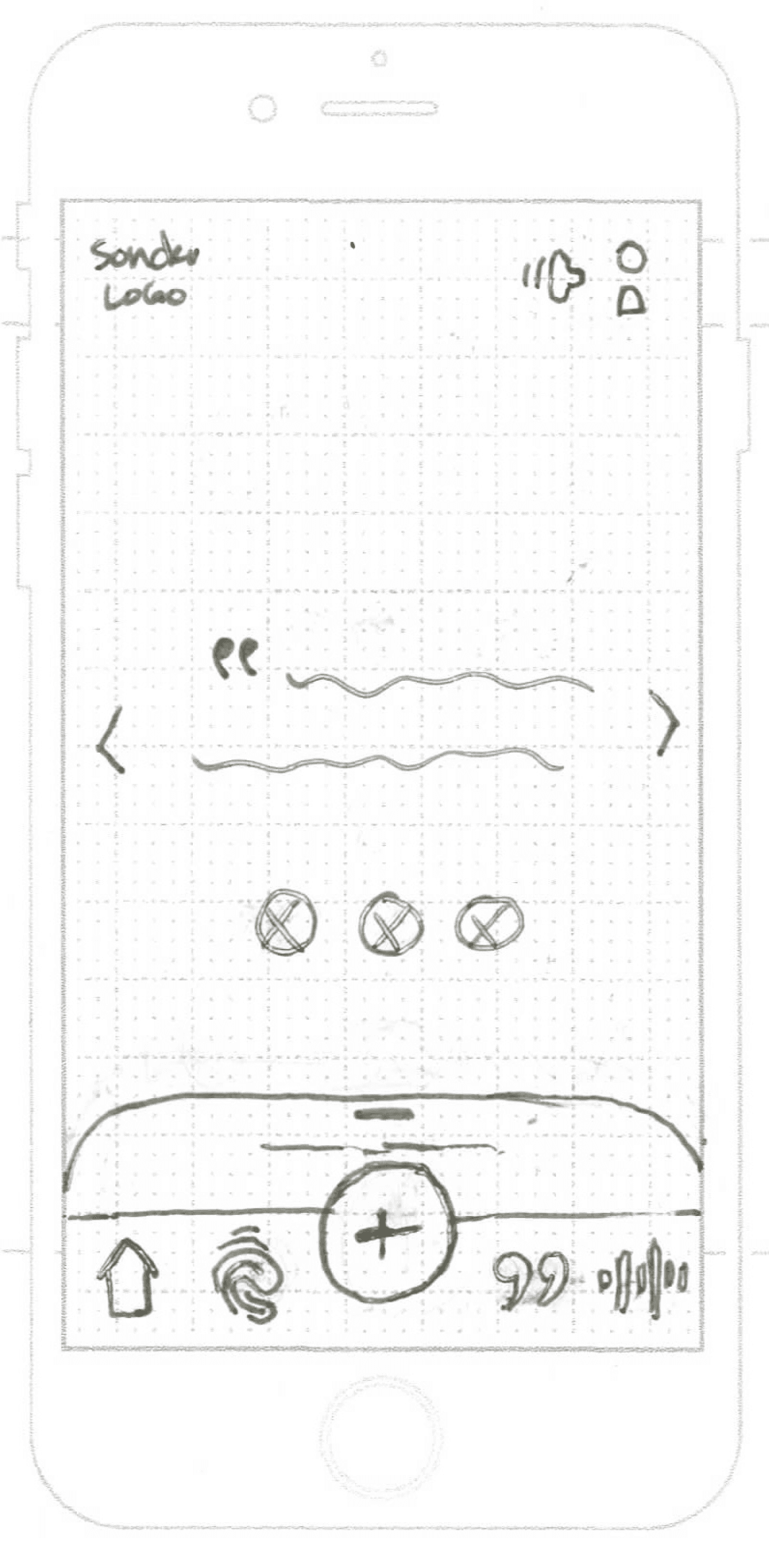
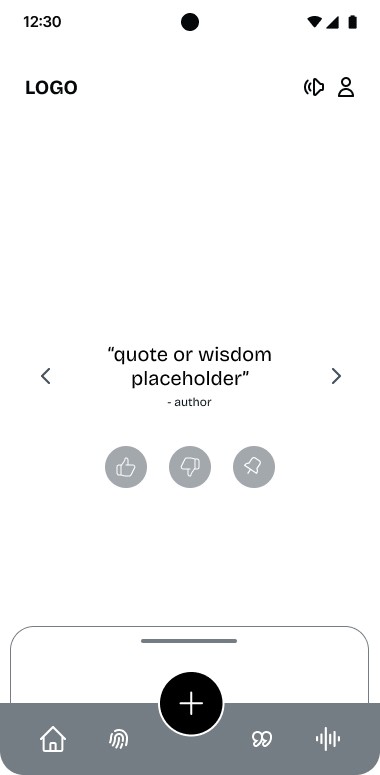
read quotes

visit profile
read quotes
animation: vertical swipe
love, like, dislike
animation: state change
navigate app, add reflection
animation: state change, overlay
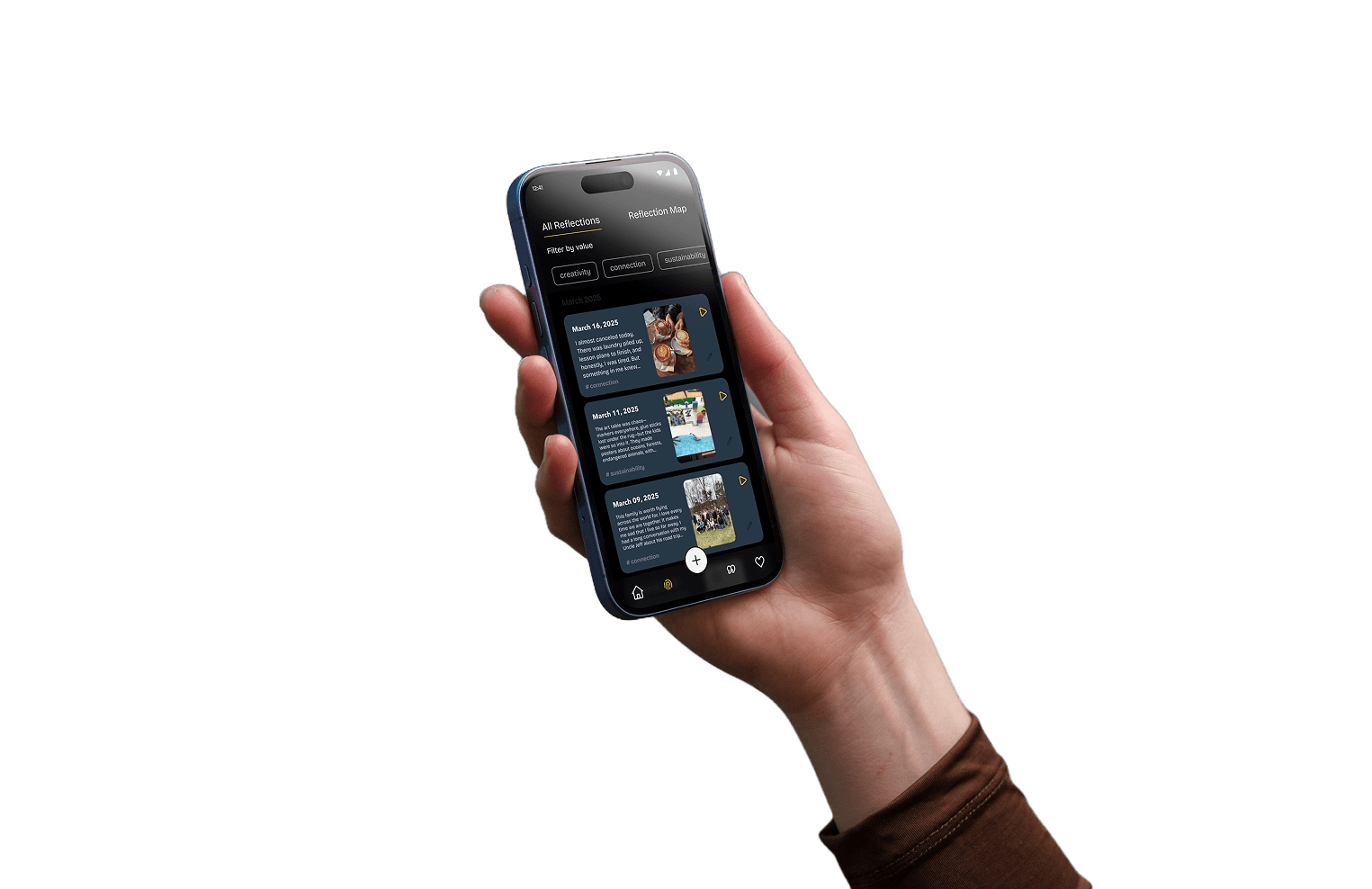
view reflections
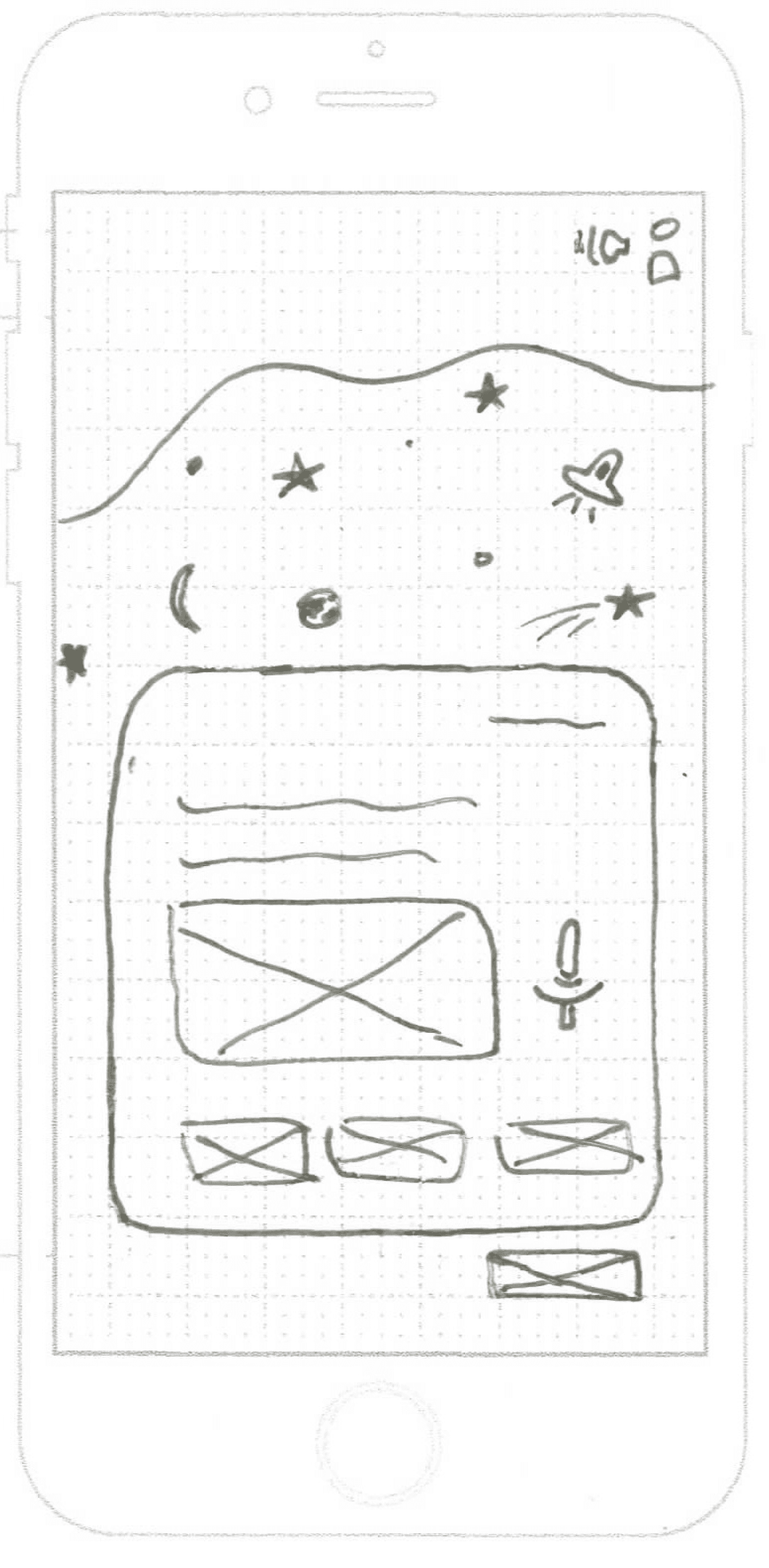
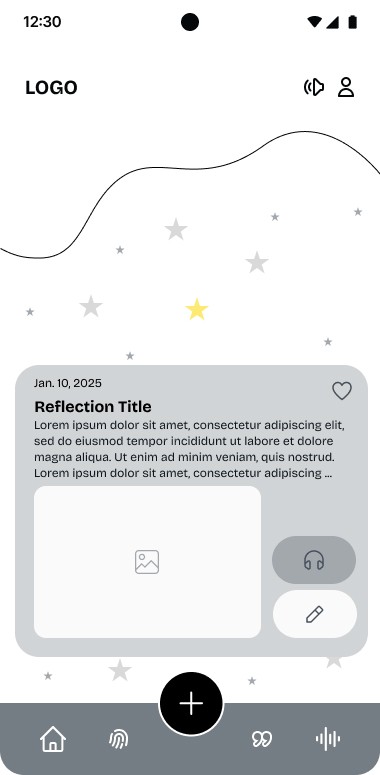
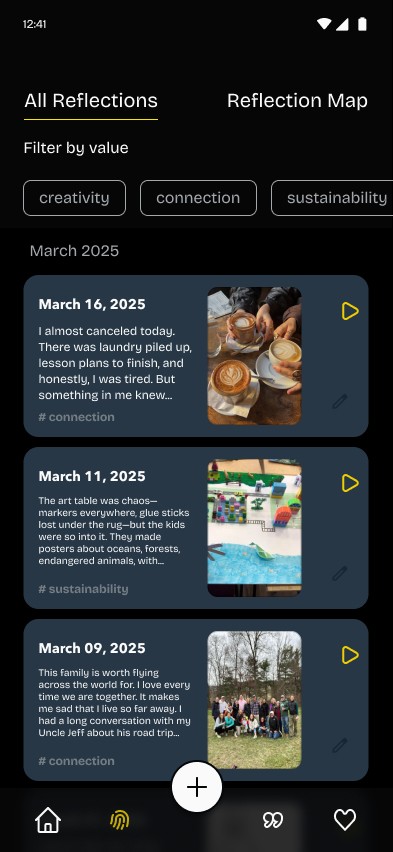
navigate between tabs
animation: state change
filter reflections by value
animation: state change, horizontal scroll
view/edit past reflections
animation: vertical scroll
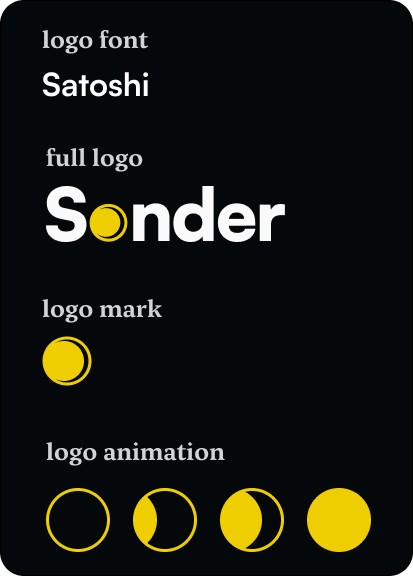
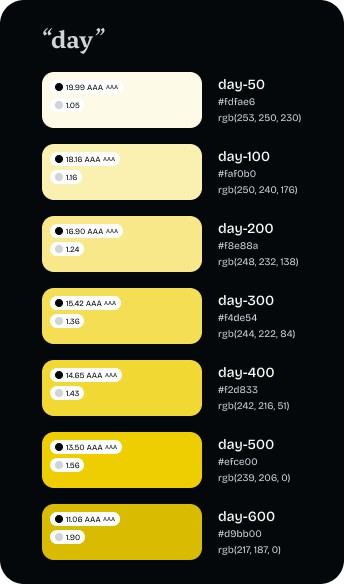
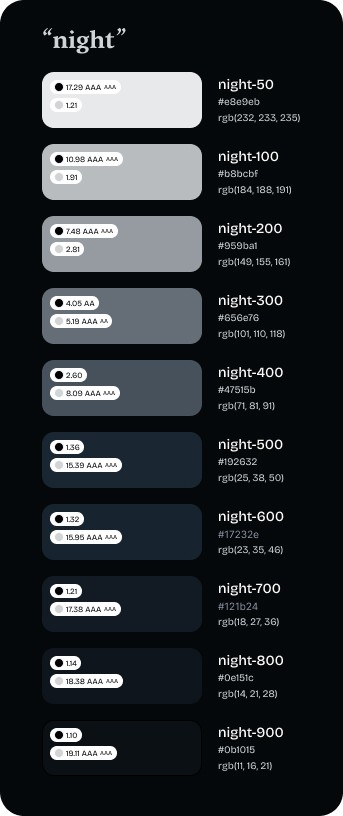
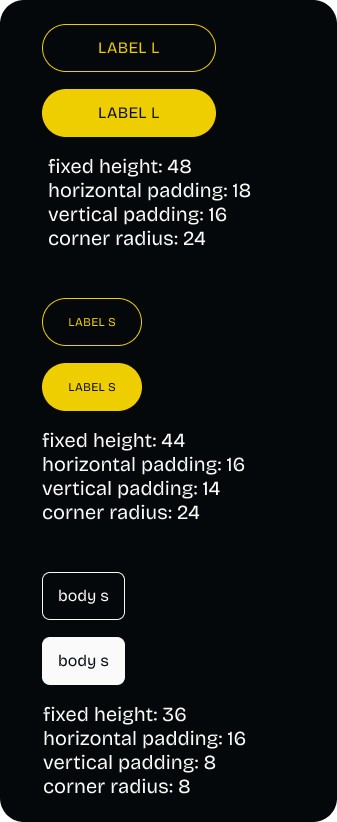
creating a design system
dark theme, emotional resonance, easy dev implementation

evaluating the initial designs
usability testing, rainbow spreadsheet, empathy mapping
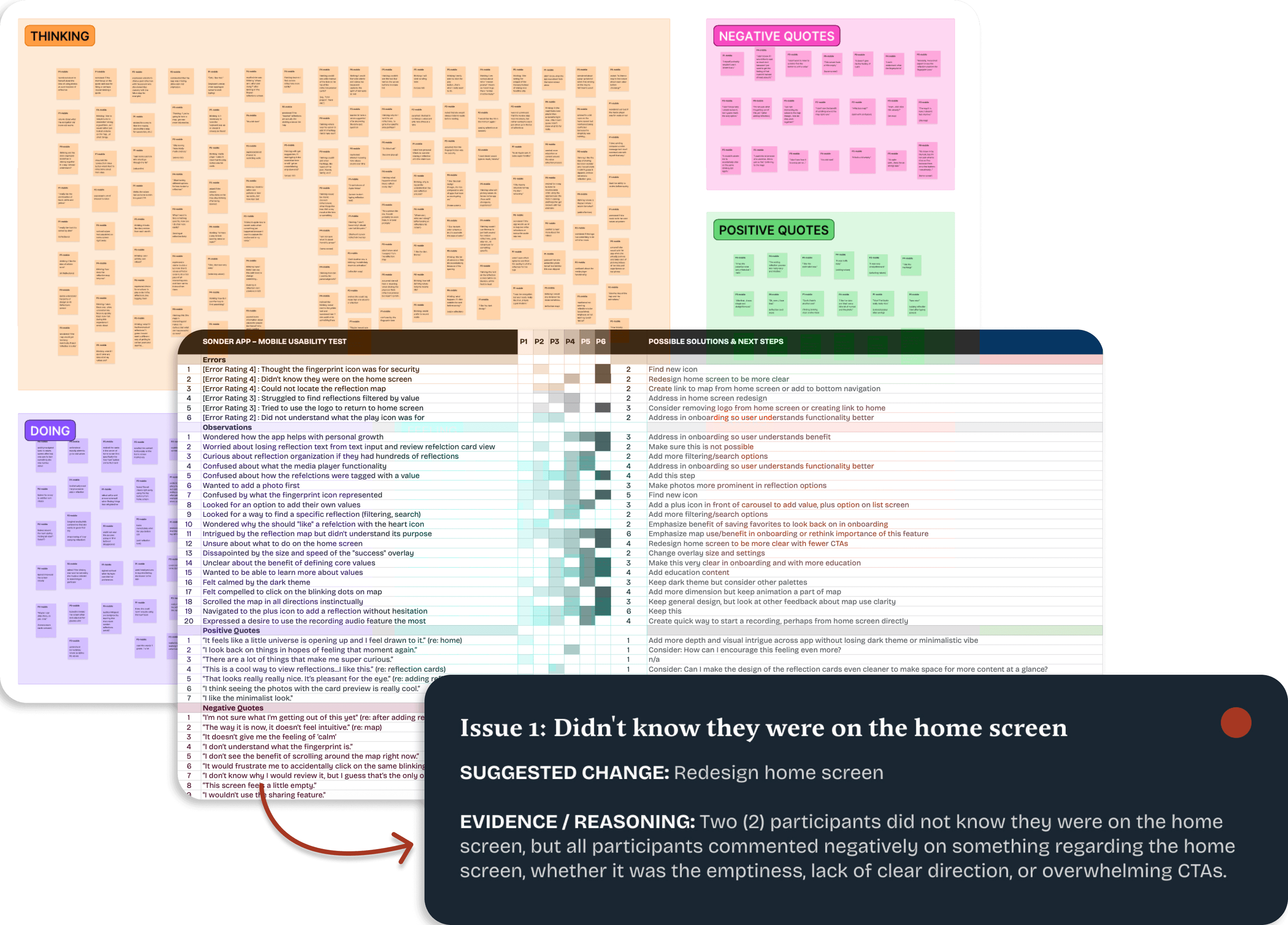
objective
Evaluate whether users can easily use the core features and if the experience feels intriguing and emotionally supportive.
key questions
Is defining values easy and insightful?
Is adding reflections seamless and fun?
Is navigating the reflection map intuitive?
Is the experience emotionally supportive?
iterating on the design
feedback from usability testing resulted in significant changes
define values
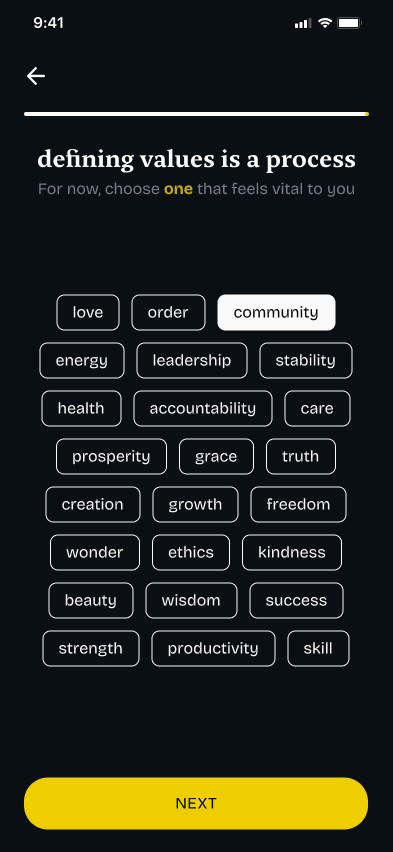
reduced uncertainty with progress bar
improved clarity with microcopy
increased accessibility with new background color
lightened cognitive load with one task per screen
read quotes
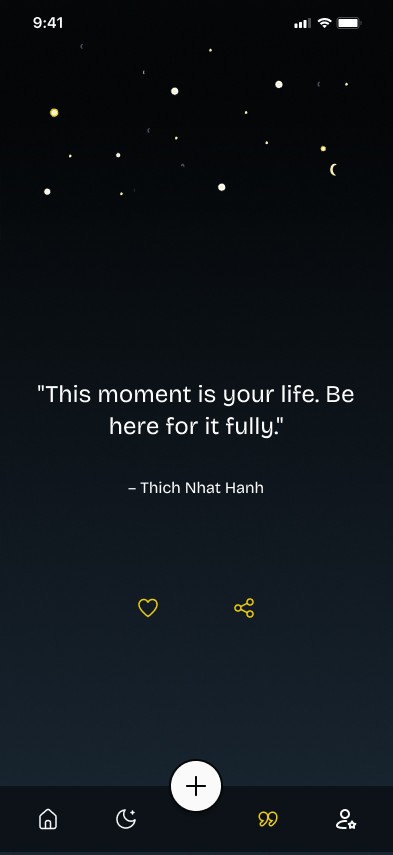
added emotional resonance with starry sky design
reduced complexity with simple, optional interactions
view reflections
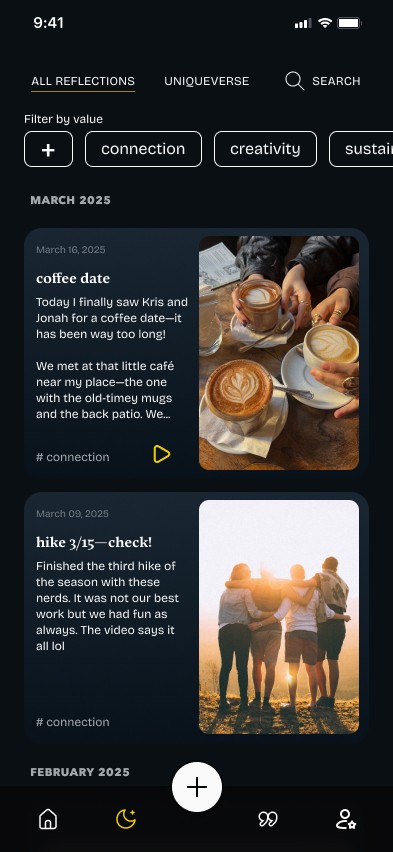
boosted usability with search option
added value with more content at a glance
supported navigability with clearer icons
“Authenticity is the daily practice of letting go of who we think we’re supposed to be and embracing who we are.”
Brené Brown